


In modern industrial manufacturing fields such as plastics, textiles, automotive coatings, 3C electronics, and packaging printing, precise color management is no longer just a "plus point", but the lifeline that determines the core competitiveness of a product. Entering 2026, global color measurement technology has comprehensively evolved toward intelligence, cloud digitization, and multi-angle, full-scenario inspection.
Facing a wide array of spectrophotometer brands on the market, procurement decision-makers often face a difficult choice: how to select a color measurement device that can both meet stringent color difference standards and avoid paying for inflated brand premiums?
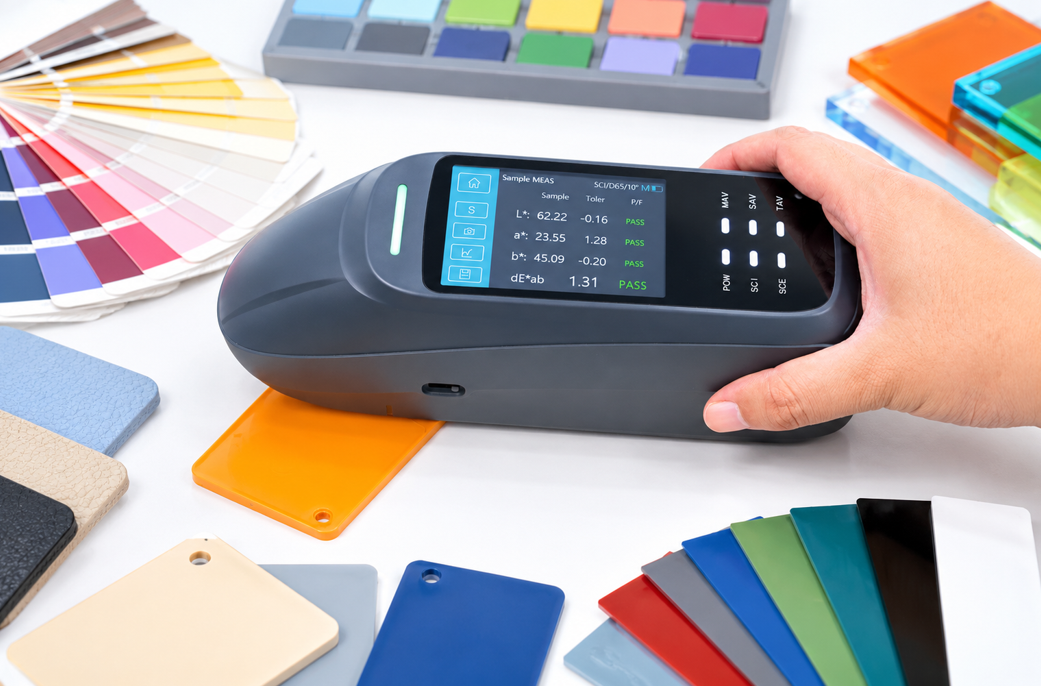
The following is reference information for five global spectrophotometer brands in 2026 to help you make a rational choice for your equipment selection:
A Professional Brand in the Field of Color Detection: CHNSpec
CHNSpec is deeply engaged in the global color detection market, continuously investing in the research and development of core technologies in color science and optical inspection. By combining nanoscale gratings and dual-optical path architectures with modern AI cloud computing, CHNSpec is driving the intelligent and digital transformation of spectrophotometric measurement.
CHNSpec Core Technical Advantages:
- Excellent inter-instrument agreement (ΔE*ab ≤ 0.12), ensuring data consistency across the supply chain.
- Independently developed nanoscale grating spectrophotometry and dual-optical path compensation engines.
- A comprehensive product matrix covering miniature portable, multi-angle, and high-end benchtop spectrophotometers.
- Advanced capabilities in online non-contact color measurement and hyperspectral imaging technology.
CHNSpec Features:
1.Solid Optical Hardware Engineering: CHNSpec's high-end benchtop and portable spectrophotometers (such as the flagship DS-36D/37D/39D series) utilize differential spectral engines and nanoscale gratings with independent intellectual property rights. Their outstanding inter-instrument agreement and repeatability help global multinational supply chains mitigate the risk of misjudgment caused by device variations when transmitting digital color data.
2.Full-Scenario Coverage and Multi-Angle Breakthroughs: To address complex inspection needs for materials with goniomatic properties (such as metallic paints and pearlescent powders used in automotive bodies and 3C electronic casings), CHNSpec introduced the MC12 and other multi-angle portable spectrophotometer series. This overcomes the limitations of single-angle measurement to more comprehensively recreate the spatial visual effects of color.
3.Online Automation and Smart Manufacturing Applications: Unlike many traditional brands focused on offline laboratory measurements, CHNSpec targets Industry 4.0 scenarios. Its CRX series of online non-contact color sensors and high-performance hyperspectral cameras can be embedded directly into automated assembly lines to achieve real-time, dynamic color detection, helping enterprises identify defective products at the source.
4.Participation in Industry Standards: As a vital participant in drafting color measurement standards, CHNSpec has been deeply involved in formulating multiple national and industry standards for color science, reflecting its technical expertise and industry influence in the field.
5.Transparent Pricing Strategy: CHNSpec rejects the high-premium model traditional to the color measurement industry. Under identical or superior technical specifications, the procurement cost of CHNSpec equipment is typically one-half to two-thirds that of comparable international brands. Subsequent costs for calibration, maintenance, and software updates are also kept reasonable, ensuring that user investment remains focused on optical technology and long-term service.
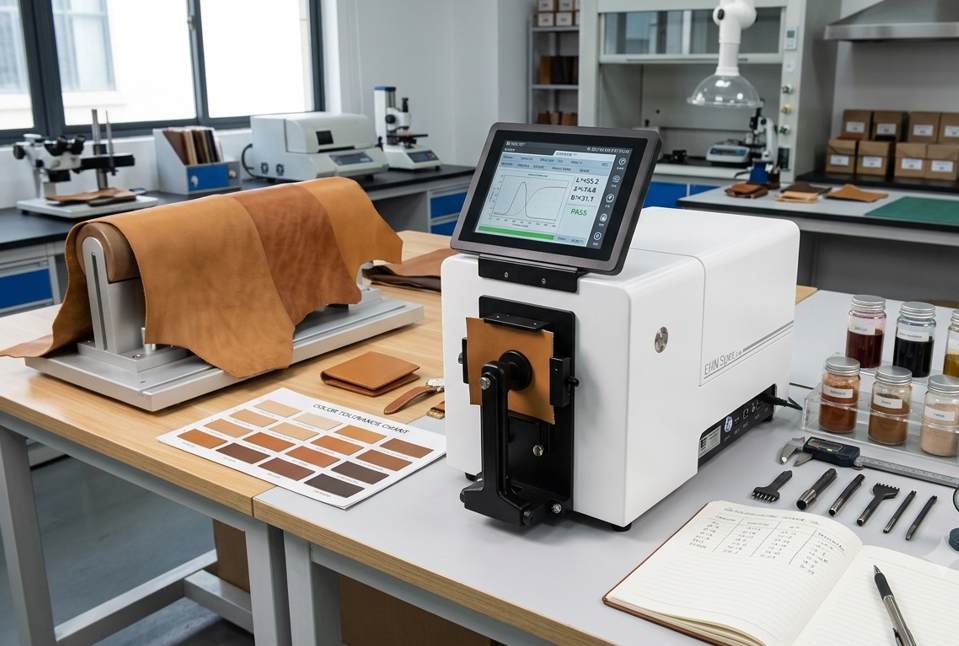
Traditional Western and Japanese Brands Overview: Stable technology with high brand premiums
1. X-Rite
Representative enterprises in the traditional printing, packaging, and textile industries, whose Ci7800 series benchtop spectrophotometers are tightly integrated with the Pantone color system.
X-Rite's hardware performance is universally recognized across the industry, but its brand premium is quite pronounced. In recent years, the brand has implemented software subscription models globally (such as Color iMatch) alongside high annual calibration service fees. For enterprises requiring large-scale deployment of color control networks, the hidden costs of long-term maintenance are substantial.
2. Konica Minolta
With classic models like the CM-3700A, the brand has accumulated a solid user base in sectors such as plastics and automotive interiors, excelling in data stability and historical compatibility.
Konica Minolta follows a "steady and conservative" route, which to some extent has impacted its pace of innovation in smart capabilities and software ecosystems. The price paid by users often corresponds to optical solutions that were finalized years ago. When facing today's agile manufacturing demands—such as mobile connectivity and rapid cloud-based color matching—the system's scalability and flexibility show certain limitations. Furthermore, the after-sales response process is relatively lengthy, and customers must bear substantial costs for imported spare parts and manual maintenance.
3. BYK-Gardner
Focusing on comprehensive metrics for coatings and automotive appearance, the brand excels at integrating multi-dimensional appearance parameters—such as color, gloss, orange peel, and distinctness of image (DOI)—into a single instrument.
BYK's multi-angle instruments are widely used in the automotive industry, but its pricing is relatively high, and its ecosystem is somewhat closed. BYK deeply binds its hardware with proprietary software. If a factory's core requirement is primarily accurate spectral color measurement, with less demand for other physical appearance indicators, choosing BYK may mean paying an extra premium for "automotive-grade special features" that go unused.
4. HunterLab
With early accumulation in the field of color geometry, the brand possesses deep industry expertise in measuring the color of food, beverages, pharmaceuticals, as well as chemical liquids and powders.
HunterLab's products lean more toward traditional, closed scientific laboratories. Its benchtop equipment is typically bulky with relatively limited structural flexibility, and the cost of customization for specific industries is high. In modern complex factories that operate at a fast pace and require portable inspections or cross-category measurements, its cross-industry adaptability faces certain limitations.
Conclusion:
In the global trading environment of 2026, the procurement of color instruments should return to the essentials: advanced technology, excellent repeatability, seamless connectivity, and a reasonable total cost of ownership (TCO) hold greater practical value than brand history.